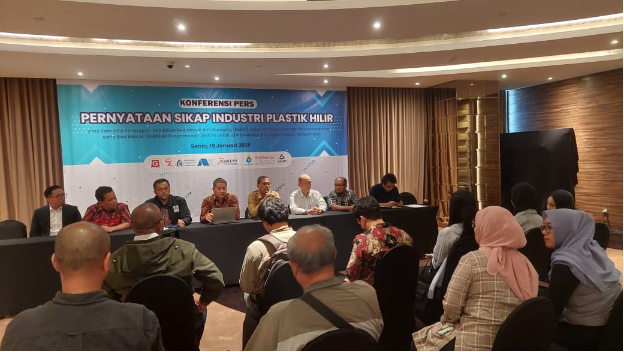
The escalation of geopolitical tensions in the Middle East has begun to affect the global plastics and packaging supply chain, raising concerns among industry players in Indonesia. Uncertainty surrounding raw material supply and price volatility has become a key issue for packaging manufacturers.
Indonesia’s plastic packaging industry still relies heavily on imported raw materials. More than 50% of plastic resins used in packaging applications are sourced from imports, while domestic production capacity can only meet about half of the national demand. The main materials used by the industry, such as Polypropylene (PP) and Polyethylene (PE) are largely supplied from Singapore, Thailand, China, India, South Korea, and several Middle Eastern countries.
Recent disruptions have intensified after several petrochemical producers in the Middle East declared force majeure, creating uncertainty in supply availability. Industry estimates suggest that existing inventories may only cover two to three months of production, depending on supply conditions.
The situation has also pushed plastic raw material prices up by an estimated 80–100%, potentially reaching 1.5 to 2 times pre-conflict levels. This poses a major challenge, as raw materials account for 50–70% of packaging production costs.
To mitigate the impact, packaging manufacturers are strengthening collaboration with Fast Moving Consumer Goods (FMCG) companies to explore alternative materials and packaging solutions. In some cases, polypropylene-based films used in flexible packaging may be substituted with polyester film, while paper-based packaging is also being evaluated as a possible alternative.
Despite current challenges, the food and beverage sector remains the largest user of plastic packaging, accounting for approximately 60% of total demand, followed by the personal care and household product sectors.
Looking ahead, Indonesia’s packaging industry is expected to maintain positive long-term prospects, supported by the country’s large domestic market and continued growth in consumer demand, despite the short-term pressures currently affecting the sector.
Chandra Asri to Declare Force Majeure
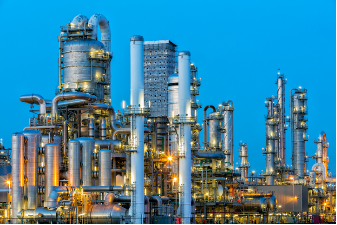
PT Chandra Asri Pacific Tbk has issued a force majeure notice to its business partners following escalating tensions involving Iran, the United States, and Israel that have disrupted shipping activities through the Strait of Hormuz, a key global corridor for energy and petrochemical trade.
The disruption could affect the flow of raw materials across the petrochemical supply chain. The company stated it remains committed to maintaining operational continuity while closely monitoring geopolitical developments.
As Indonesia’s largest integrated petrochemical producer, Chandra Asri Pacific Tbk manufactures essential materials including olefins, polyolefins, and styrene monomers used in products such as plastic packaging, pipes, automotive components, and household goods.
Konflik Timur Tengah Ganggu Pasokan Bahan Baku Plastik
Ketegangan geopolitik di kawasan Timur Tengah mulai berdampak pada rantai pasok global bahan baku plastik. Kondisi ini memicu kekhawatiran di kalangan pelaku industri kemasan di Indonesia terkait ketersediaan bahan baku dan lonjakan harga resin.
Industri kemasan plastik nasional masih bergantung pada impor bahan baku. Lebih dari 50% kebutuhan resin plastik dipasok dari luar negeri, sementara kapasitas produksi dalam negeri baru mampu memenuhi sekitar setengah dari kebutuhan nasional. Bahan baku utama seperti Polypropylene (PP) dan Polyethylene (PE) umumnya dipasok dari Singapura, Thailand, China, India, Korea Selatan, serta negara-negara di kawasan Timur Tengah.
Situasi semakin kompleks setelah sejumlah produsen petrokimia di Timur Tengah menyatakan kondisi force majeure, yang menimbulkan ketidakpastian pasokan. Pelaku industri memperkirakan stok yang tersedia saat ini hanya mampu menopang produksi sekitar dua hingga tiga bulan ke depan, tergantung perkembangan distribusi global.
Di sisi lain, harga bahan baku plastik juga mengalami kenaikan tajam. Industri memperkirakan harga resin dapat meningkat hingga 80–100% atau mencapai 1,5 hingga 2 kali lipat dibandingkan harga sebelum konflik. Hal ini menjadi tantangan besar karena biaya bahan baku menyumbang sekitar 50–70% dari total biaya produksi kemasan.
Untuk mengantisipasi dampak tersebut, produsen kemasan mulai memperkuat kolaborasi dengan produsen Fast Moving Consumer Goods (FMCG) guna mencari alternatif material. Pada beberapa aplikasi flexible packaging, penggunaan film polyester mulai dipertimbangkan sebagai pengganti polypropylene, sementara opsi kemasan berbasis kertas juga dievaluasi.
Di tengah berbagai tantangan yang dihadapi saat ini, sektor makanan dan minuman tetap menjadi pengguna terbesar kemasan plastik, dengan kontribusi sekitar 60% dari total permintaan, diikuti oleh sektor personal care dan produk kebutuhan rumah tangga.
Ke depan, industri kemasan di Indonesia diperkirakan tetap memiliki prospek yang positif, didukung oleh besarnya pasar domestik serta pertumbuhan konsumsi nasional, meskipun saat ini industri pengemasan menghadapi sejumlah tekanan jangka pendek.
Chandra Asri Nyatakan Force Majeure
PT Chandra Asri Pacific Tbk mengumumkan kondisi force majeure kepada para mitra usaha menyusul eskalasi konflik Iran dengan Amerika Serikat dan Israel yang berdampak pada penutupan Selat Hormuz, salah satu jalur utama perdagangan energi dan petrokimia dunia.
Gangguan pada jalur strategis tersebut berpotensi memengaruhi distribusi bahan baku dalam rantai pasok petrokimia global. Perusahaan menyatakan tetap berkomitmen menjaga kesinambungan operasional sambil terus memantau perkembangan situasi geopolitik.
Sebagai perusahaan petrokimia terintegrasi terbesar di Indonesia, Chandra Asri Pacific Tbk memproduksi berbagai bahan baku industri seperti olefin, poliolefin, dan styrene monomer yang digunakan untuk berbagai produk, termasuk kemasan plastik, pipa, komponen otomotif, dan peralatan rumah tangga.